
Last updated November 16, 2026
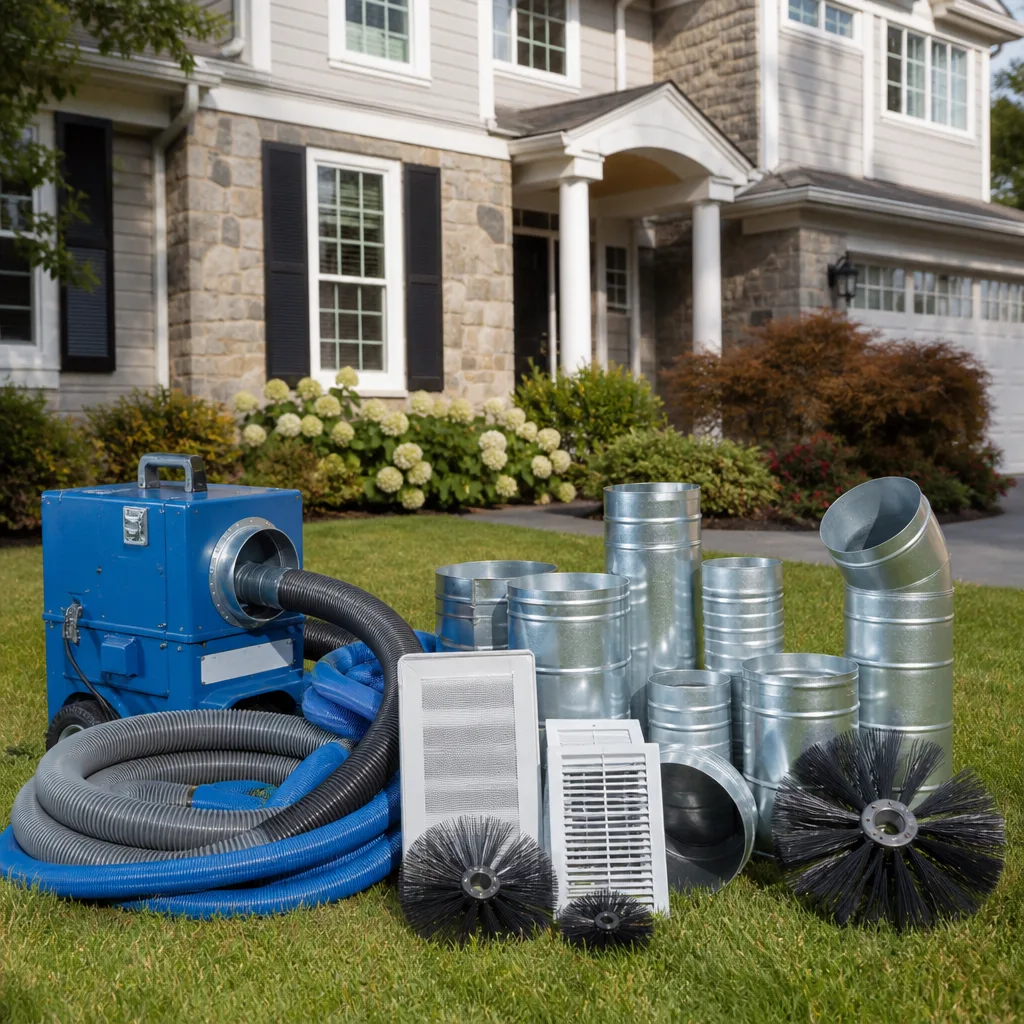 Whole-home duct cleaning
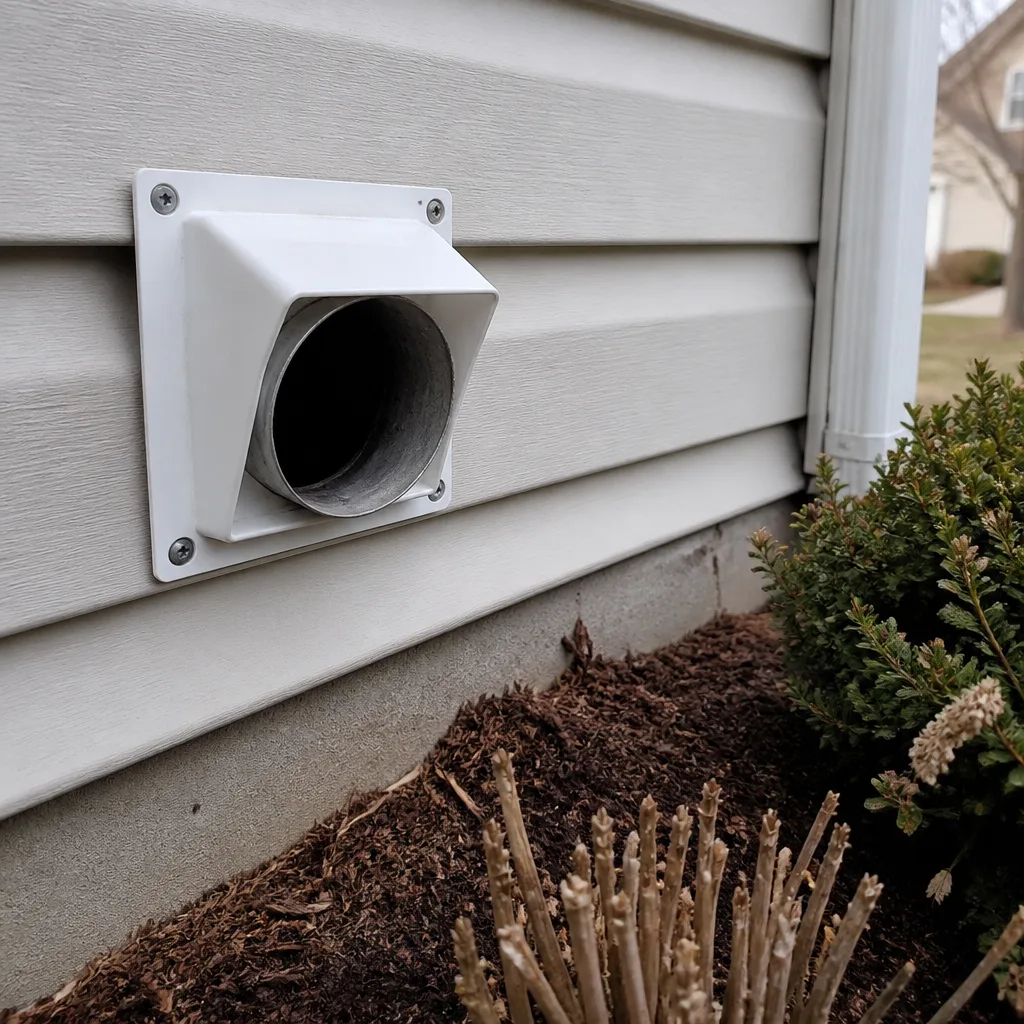 Dryer vent cleaning
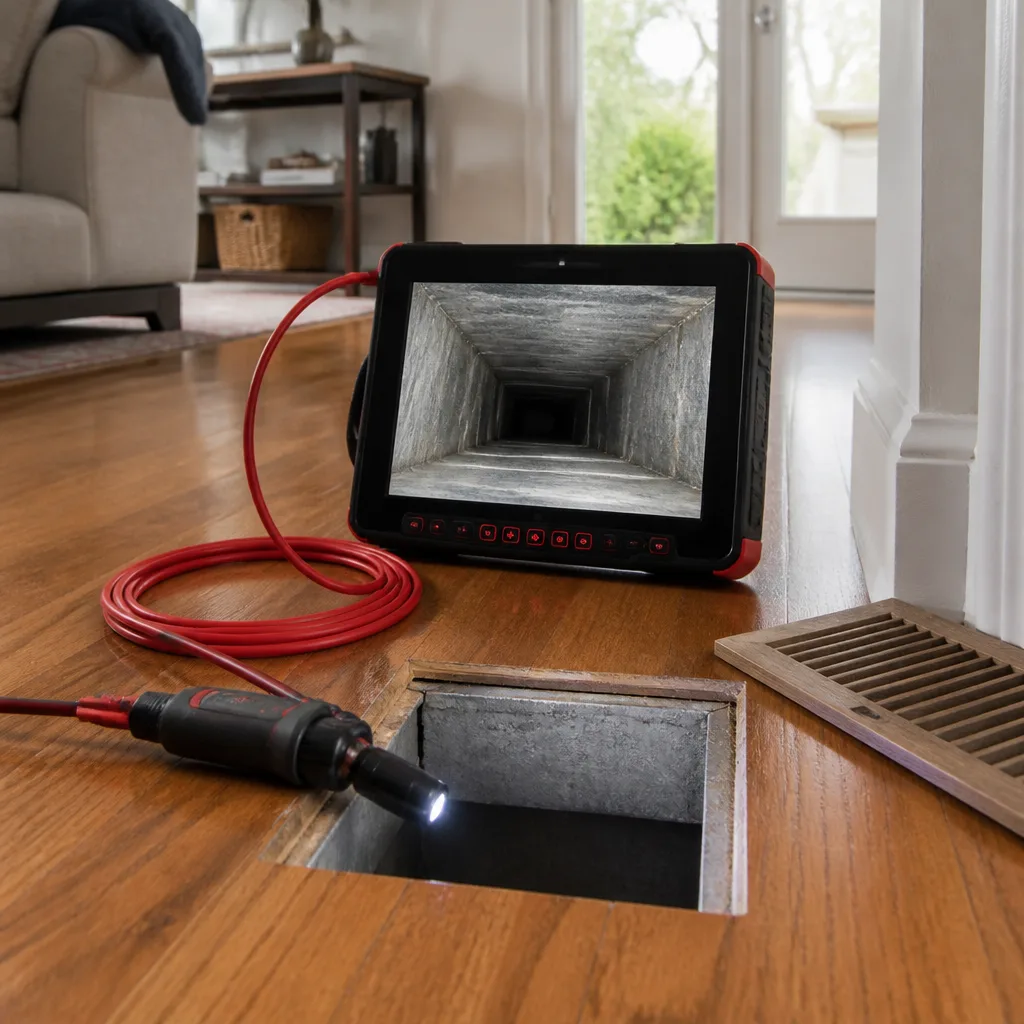 Camera inspection
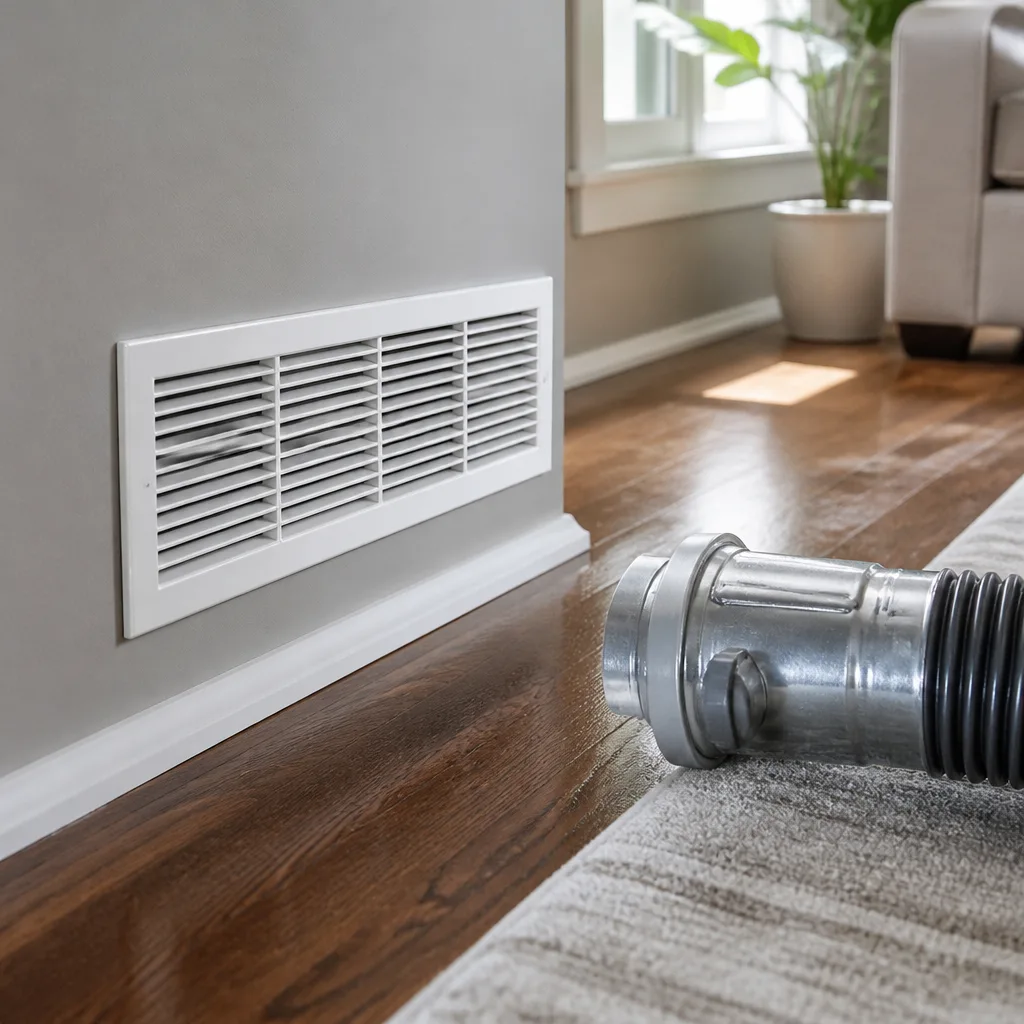 Sanitizing & deodorizing
Whole-system duct and dryer vent check with before-and-after photos - you see exactly what came out of your vents
That "$99 whole-house special" is a bait ad - the real number appears once they are in your hallway, or the "clean" is a shop-vac at the register. We photograph the inside of your ducts before and after instead.
DIY vs Professional Air Duct Cleaning: The Deltona Homeowner’s Decision Guide
Most homeowners assume the only real difference between DIY and professional air duct cleaning is the bill at the end. That framing misses the point entirely. The real question is whether the equipment being used can generate enough negative pressure to pull contamination out of the duct system instead of just stirring it up and pushing it deeper. A consumer-grade wet/dry vacuum moves roughly 55 to 80 cubic feet per minute of air. A professional truck-mount system runs somewhere between 4,000 and 16,000 CFM. That gap is not about speed or convenience. It’s the difference between genuinely removing debris from a duct liner and redistributing it through your living room. In Deltona, where most homes were built with flexible ductwork that can be fragile, that distinction matters more than almost anywhere else in Central Florida. This guide walks you through the physics, the risks, and the honest cost-benefit math so you can make a clear-eyed decision.
Quick Answer
Professional air duct cleaning is worth it for most Deltona homes because consumer equipment cannot achieve the negative pressure needed for true source removal, which the industry standard sets at a minimum airflow to actually pull debris out rather than just agitate it. DIY has a legitimate place for filter changes, register covers, condensate line checks, and exterior cap inspections. Anything involving the interior of the duct run, especially in older flex duct systems common in Deltona, is a job for professional-grade equipment.
Styles & brands we work with
- Whole-home duct cleaning
- Dryer vent cleaning
- Camera inspection
- Sanitizing & deodorizing
Table of Contents
- The Physics of Source Removal: Why CFM Matters More Than the Brush
- What a Homeowner Can Legitimately DIY
- When a DIY Attempt Makes Professional Remediation More Expensive
- The Florida Flex Duct Problem
- What Professional Equipment Actually Does Differently
- Cost-Benefit: When DIY and Professional Pricing Are Closer Than You Think
- Common Mistakes to Avoid
- When to Call a Professional
The Physics of Source Removal: Why CFM Matters More Than the Brush
Duct cleaning is not vacuuming a floor. It’s a negative pressure operation. The idea is to put the entire duct system under suction so that when a brush or air whip disturbs the contamination clinging to the interior surfaces, the loosened material gets pulled toward the collection point instead of drifting into the rooms you live in. Without that containment, you are not cleaning the ducts. You are shaking them.
The National Air Duct Cleaners Association sets a minimum airflow threshold for effective cleaning, and that threshold is well beyond what any shop vac or consumer tool can produce. The reason is straightforward: contamination in ducts is not loose dust sitting in a pile. It’s a layer bonded to the duct wall by moisture, static, and time. Breaking that bond requires agitation, and capturing what you break loose requires sustained high-volume suction across the entire system at once.
A professional setup does a few things a wet/dry vac cannot:
- Seals the system so make-up air comes only through the register openings the technician is working at.
- Pulls the whole system into negative pressure simultaneously, not one branch at a time.
- Filters the exhaust through HEPA-grade containment so the air leaving the system is cleaner than what came in.
- Maintains that pressure long enough to pull debris from the far ends of the longest runs, not just the first few feet.
In Deltona homes, where runs can extend from a central air handler through an attic and out to the far bedrooms, that pressure differential is not a luxury. It’s the whole mechanism. We use Rotobrush and Nikro systems precisely because they’re built to hold that pressure across an entire residential layout rather than just one branch at a time.
What a Homeowner Can Legitimately DIY
There is real work you can do yourself, and doing it well extends the interval between professional cleanings. This is the part of the equation most guides skip in one direction or the other. DIY is not useless. It’s just limited to the surfaces and components you can safely reach without disturbing the sealed duct interior.
What a careful homeowner can handle:
- Register cover cleaning. Pop the grilles off, wash them in the sink or hose them down outside, dry them fully, and reinstall. This is the front door to the system and it collects a surprising amount of dust and pet hair.
- Filter replacement. Change the filter on the schedule your HVAC system calls for. In Deltona’s long cooling season, that often means more frequently than the “every three months” printed on the box. A clogged filter starves the system and accelerates dust buildup downstream.
- Condensate drain maintenance. A clogged condensate line is an HVAC problem, not a duct problem, but checking the drain and clearing algae buildup is a legitimate homeowner task that protects the air handler.
- Exterior cap and vent inspection. Look at the outside terminations of your dryer vent and any fresh-air intakes. Check for bird nests, lint buildup, or damaged flaps. If something is wrong, stop and call a professional. Do not attempt to reach into the duct.
That last point deserves emphasis. Once you cross from the exterior cap into the interior of the duct, you’ve left DIY territory. What you cannot do yourself is clean the inside of the duct runs, inspect the inner liner of flexible duct, verify that flex connections at the plenum are sealed, or evaluate whether the insulation inside a duct has been compromised. Those require equipment and, more importantly, the ability to see what’s happening inside a sealed system.
When a DIY Attempt Makes Professional Remediation More Expensive
This is the part of the conversation that gets left out of YouTube tutorials. A DIY attempt that goes wrong does not just fail to clean. It can create a problem that costs more to fix than the original cleaning would have. In our experience in Deltona, three failure modes come up more often than the rest.
Disturbed mold colonies. If there is microbial growth inside a duct system and a homeowner agitates it with a shop vac or a consumer brush, the colony is disrupted and spores are released into the air stream. What was a localized problem becomes a distributed one. The right response at that point is containment and filtration at a higher level than a routine cleaning, which is where equipment like Abatement Technologies air filtration systems comes in. What would have been a straightforward cleaning becomes a remediation with a bigger scope.
Broken flex duct connections. Flexible duct is connected to rigid fittings with tie straps, mastic, or both. Consumer tools snag on that connection because they don’t have the flexible control of a professional brush head. Once a connection separates, the system is pulling attic air into your living space. Repairing it means access, reconnection, and often re-sealing. That’s a duct repair job, not a cleaning job, and it means the homeowner now needs a contractor who can actually fix ductwork rather than one who only cleans it.
Dislodged interior insulation. The insulation lining the inside of a flex duct is not structural. It’s glued or bonded to the outer jacket. Rough agitation can tear that lining loose, and once it’s loose it becomes a contaminant itself, blowing fibers into the air stream. A cleaning can’t fix a torn liner. It has to be replaced, which means a new duct run.
None of these are hypotheticals in a market like Deltona, where a large share of the housing stock uses flexible duct with a foil inner liner and the humidity is unforgiving. The margin for error is thin.
The Florida Flex Duct Problem
Most Deltona homes were built with flexible duct, and in older homes, particularly those built before 2005, that flex duct often has a foil inner liner rather than a more durable material. The foil liner is thin, it’s bonded, and it does not tolerate aggressive brushing. Under a consumer-grade brush or a too-rigid attachment, it tears, delaminates, or gets pushed loose from the outer jacket.
This is the single biggest reason a “just rent a machine and do it yourself” approach backfires in this market. The equipment itself is the hazard. A consumer-grade brush head has no give. It’s also usually fed through a hose the operator pushes by hand with no visibility into what’s happening at the brush end. A technician using a Rotobrush system has a flexible, controlled brush that conforms to the duct and a camera or visual confirmation of the run. The tool is doing the work, not brute force.
Add Deltona’s climate to the mix and the stakes rise. Long cooling seasons mean the system runs constantly, condensation inside the air handler and at the plenum is routine, and any moisture that gets into a duct has time to become a growth site. Flex duct that has been disturbed, torn, or loosened creates the conditions for that moisture problem to spread. This is why professional cleaning in Deltona is not just about removing dust. It’s about inspecting for the conditions that lead to contamination in the first place, and catching flex duct problems before they turn into an air quality issue.
If you don’t know what type of duct is in your home, that alone is a good reason to have a professional look. We can identify the duct type, its condition, and whether it’s a candidate for cleaning at all, which is information you cannot get from the outside.
What Professional Equipment Actually Does Differently
The tool brands are not a marketing detail. They’re the operational difference between cleaning a duct system and pretending to. Here’s a plain-language breakdown of what each piece of professional-grade equipment is doing and why a homeowner’s alternative cannot match it.
High-volume vacuum systems. Professional systems move thousands of CFMs. The point is not speed. It’s that the entire system stays under negative pressure throughout the job, so agitation and extraction happen in the same operation. A shop vac pulls from one point and disturbs dust everywhere else.
Rotary brush systems. Systems like Rotobrush use a flexible rotary brush with controlled tension. It agitates contamination from the duct wall without tearing it. Consumer brushes either don’t contact the wall firmly enough to remove anything or contact it too aggressively and damage it. There’s no middle ground with consumer-grade tools.
HEPA-grade filtration and containment. Equipment like Abatement Technologies filtration units exists because in remediation work, the air leaving the system has to be cleaner than a typical vacuum exhaust. That standard applies in residential duct cleaning too. You don’t want the exhaust of the vacuum reintroducing the debris you just removed.
Air quality product integration. We work with Aprilaire and Honeywell indoor air quality products, which means the recommendation doesn’t stop at “clean the ducts.” If the system has a filtration weakness, a humidity control issue, or a component that should be replaced as part of the job, we can address it. That’s the difference between a cleaning crew and a duct system specialist. For the full picture of how we approach a cleaning, see our air duct cleaning page.
Cost-Benefit: When DIY and Professional Pricing Are Closer Than You Think
The cost comparison most homeowners run is “professional cleaning costs money, DIY costs a rental fee.” That math is incomplete because it leaves out the downside risk of a botched DIY job and the cost of the equipment that would be required to do it properly.
Consider what a truly proper DIY attempt would require: a high-volume vacuum capable of holding negative pressure across the system, a flexible rotary brush with controlled tension, HEPA filtration on the exhaust, sealing materials for the register openings, and the knowledge to identify and avoid fragile flex duct connections. That equipment does not exist at a rental counter in a usable configuration for a homeowner. The consumer alternative is a shop vac and a brush kit, which is exactly the equipment that damages pre-2005 flex duct and disturbs mold colonies rather than containing them.
The gap between “what I can rent” and “what actually cleans a duct system” is where the real cost of DIY lives. If the rental attempt damages a flex connection, the repair that follows is a duct repair job. If it disturbs a growth colony, the follow-up is remediation with containment. Either scenario costs more than the original cleaning would have.
This is not an argument that professional cleaning is inexpensive. It isn’t, and it shouldn’t be framed that way. The argument is that for the specific job of cleaning a Florida flex duct system, the DIY option is not actually a cheaper version of the same service. It’s a different and riskier service that can produce a worse outcome. When those are the two options, the cost-benefit comparison tilts toward professional work for anything beyond the surface-level tasks.
The honest starting point is a conversation about what your specific system needs. Call (844) 980-4682 and we’ll give you a straight answer, including whether you actually need a cleaning at all. The estimate is free and the price is set per job by the written estimate.
Common Mistakes to Avoid
- Using a shop vac on the duct interior. A consumer wet/dry vac produces a fraction of the pressure needed for source removal and no filtration on the exhaust. It agitates debris and pushes it back into the living space instead of pulling it out.
- Running a rigid brush through older flex duct. Deltona homes built before 2005 often have foil-lined flex duct that tears under aggressive brushing. A torn liner is a replacement, not a cleaning.
- Assuming a filter change is a duct cleaning. The filter catches what reaches it. The dust settled on the duct walls and the plenum never touches the filter. These are different jobs.
- Cleaning the ducts before fixing the leak. If a flex connection is loose or the air handler has a gap, cleaning first means contamination returns immediately. Locate and seal the source before cleaning.
- Ignoring the dryer vent as part of the air system. The dryer vent is a duct too, with its own lint accumulation and its own risk profile. It is not a separate category of home maintenance. We cover it under dryer vent cleaning for a reason.
- Treating a register cover wash as full duct maintenance. The grilles are the surface. Washing them is good practice, but it does nothing for the duct run behind them.
- Assuming the cheapest online coupon reflects the real cost. A price that seems too low for a whole-system cleaning usually is. Ask what is actually included and what the price covers before scheduling.
When to Call a Professional
Call a professional when you don’t know the condition of your duct system, when you’ve recently bought an older Deltona home and have no service history, when you’re seeing visible dust on register faces shortly after cleaning the covers, or when anyone in the house has allergy symptoms that seem tied to the HVAC season. Call when you’ve attempted a DIY cleaning and it didn’t produce the result you expected. Call when you can see damage at a flex connection or suspect a liner has been disturbed. These are all scenarios where the right next step is an inspection by someone who can see inside the system and identify what’s actually happening.
If a dryer vent is on your list, that’s also a call-in scenario. Dryer vents are part of the same air system and accumulate lint that a homeowner cannot reach from the outside cap.
Deltona Duct Cleaning offers free estimates in Deltona. Call (844) 980-4682 to get one started. We answer 24/7, and fast dispatch is available 7am to 7pm, Sunday through Friday. We offer cleaning, repair, and air quality work under one roof, which means you’re not coordinating multiple contractors if the inspection turns up a repair issue. To learn more about the scope of what we do, see our Deltona Duct Cleaning overview page. If you’re in the surrounding area, our Deltona service area page has more about the neighborhoods we work in.
See the difference
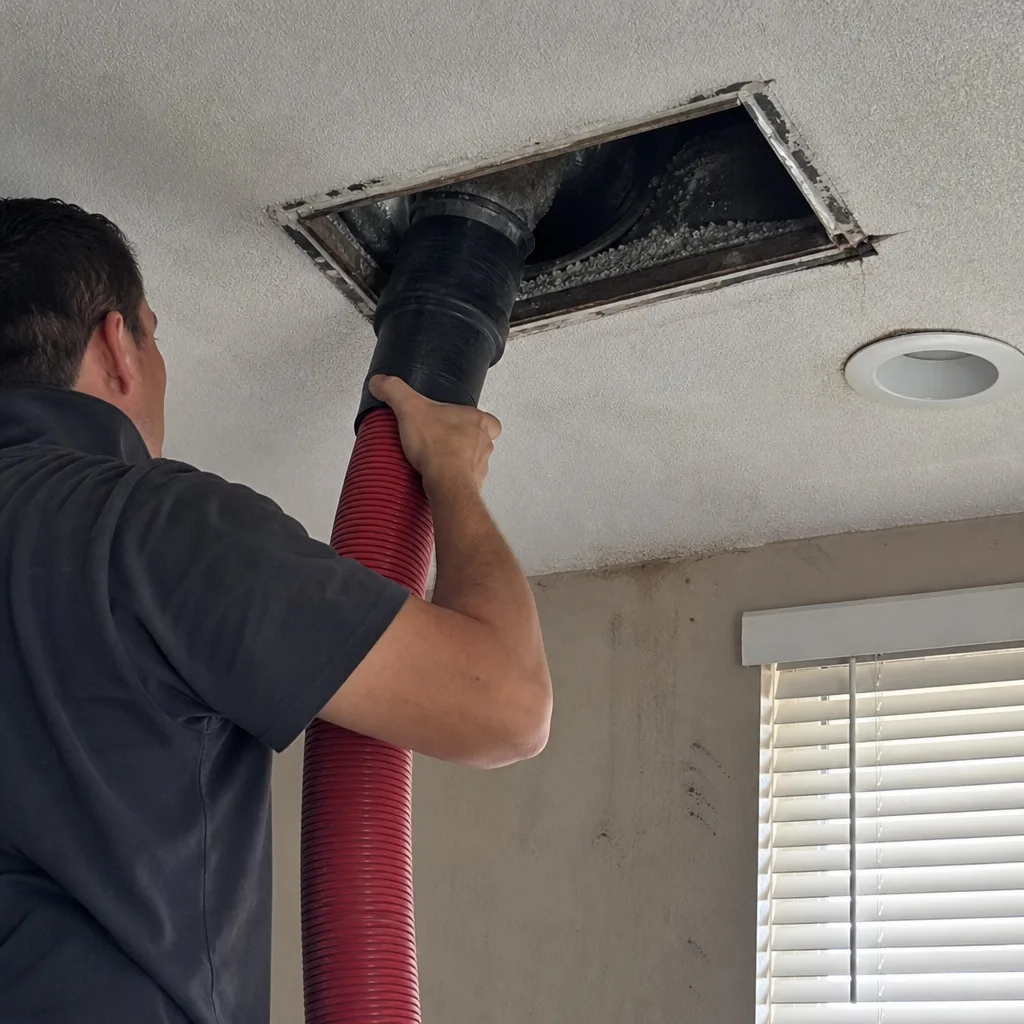 Before
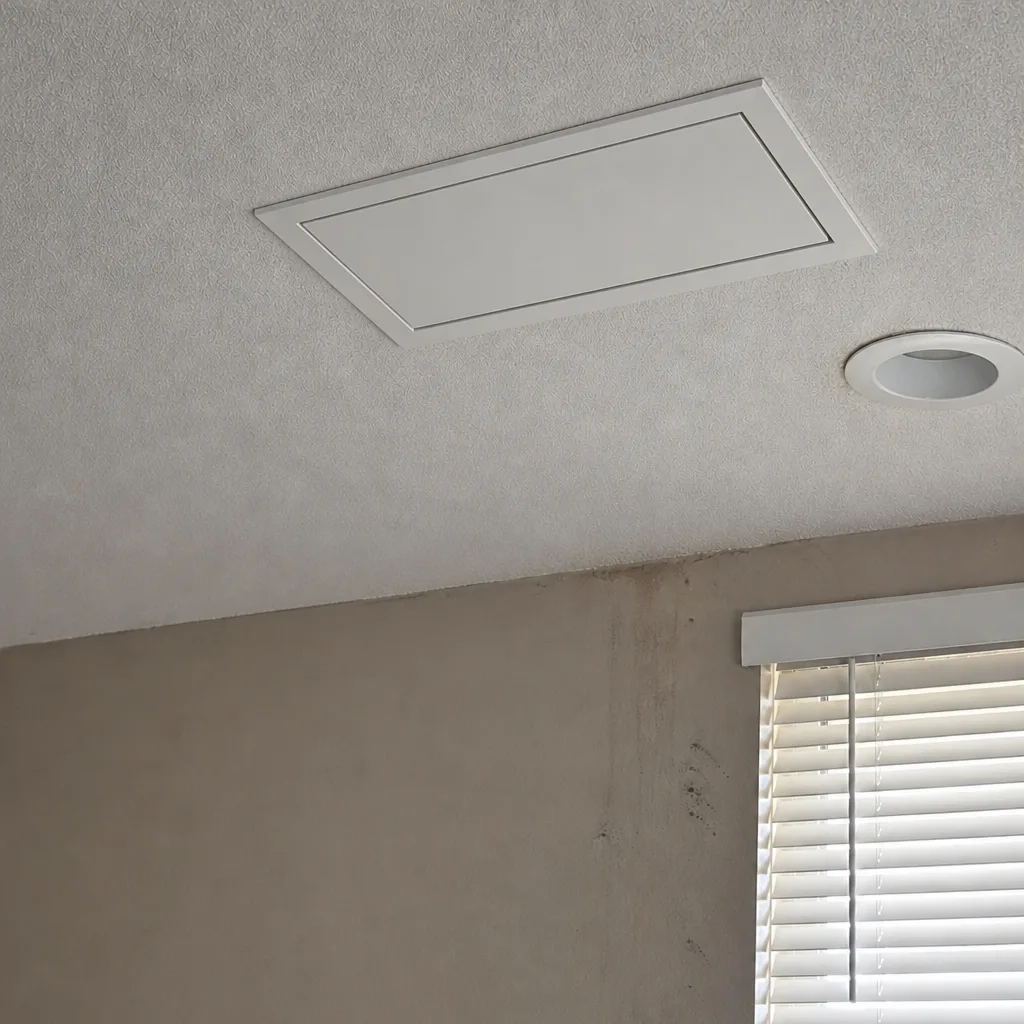 After
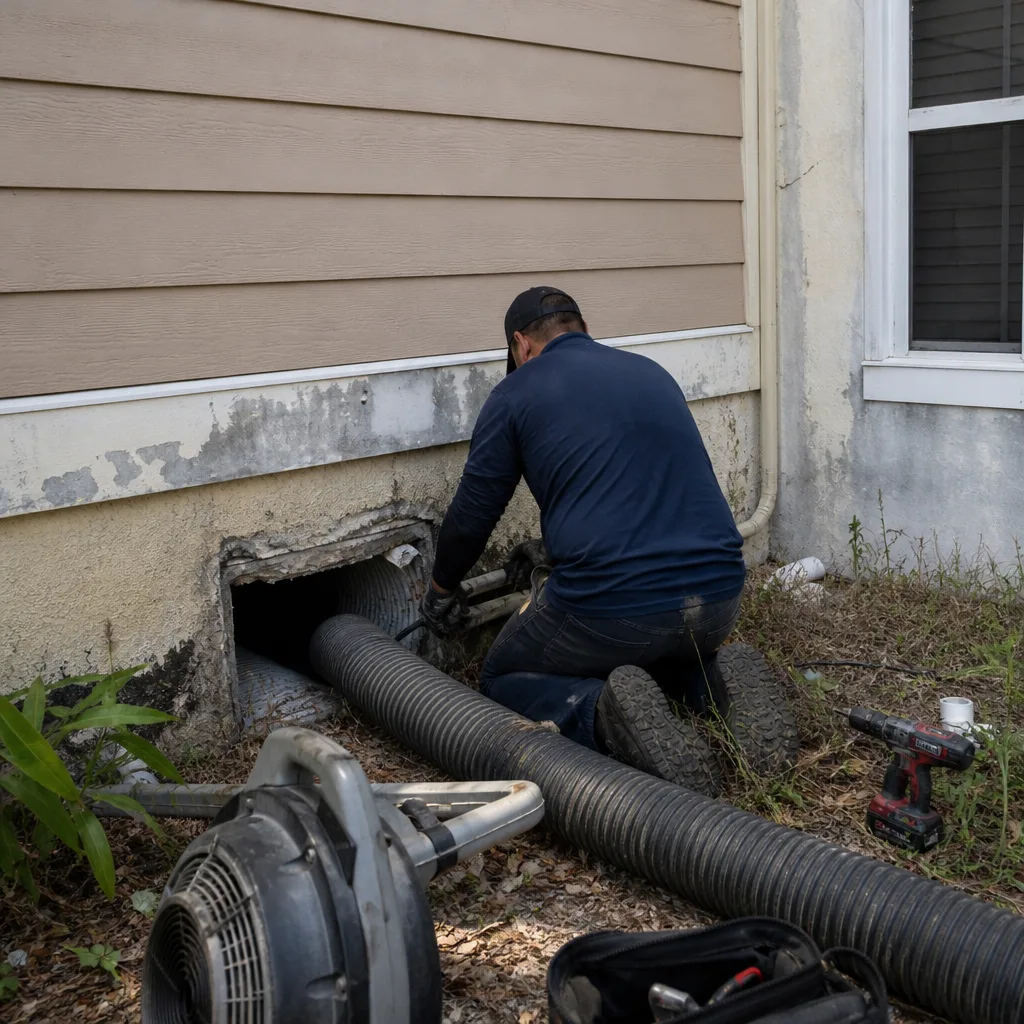 Before
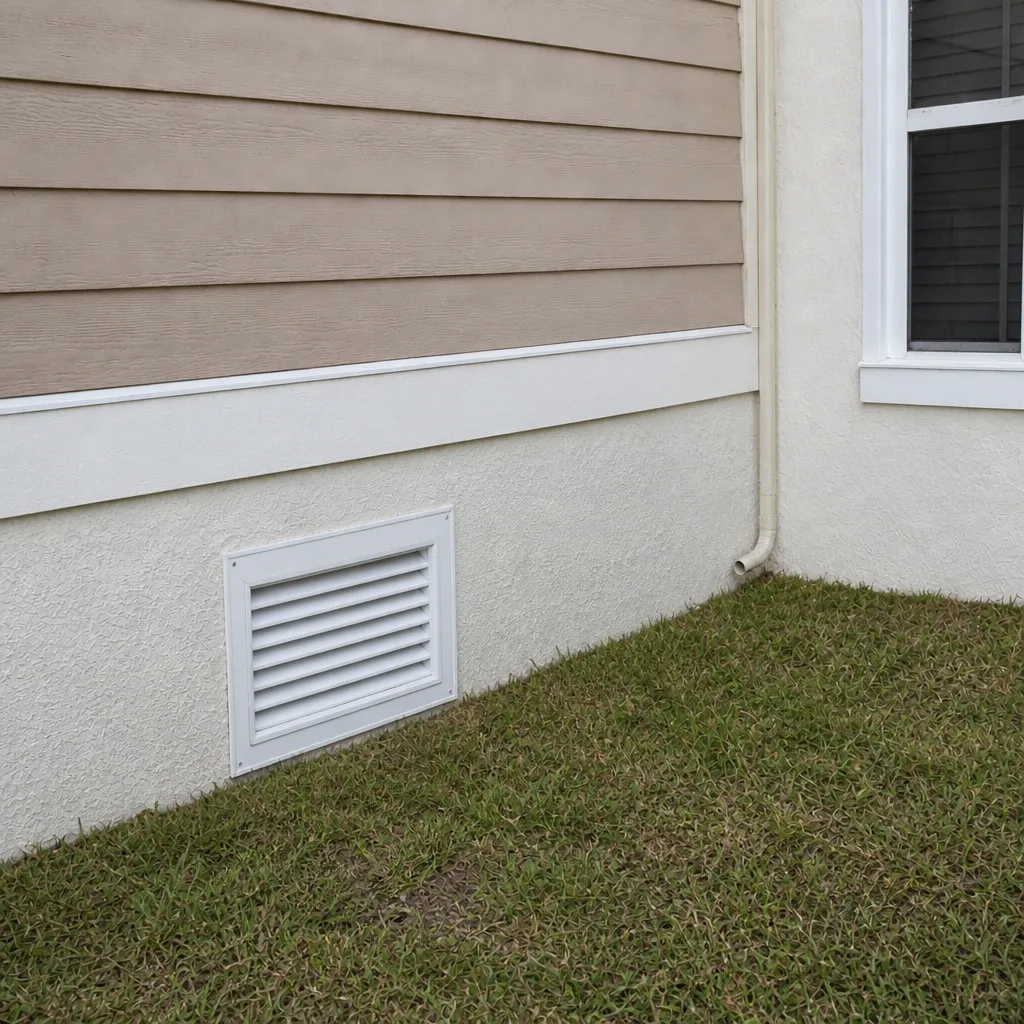 After
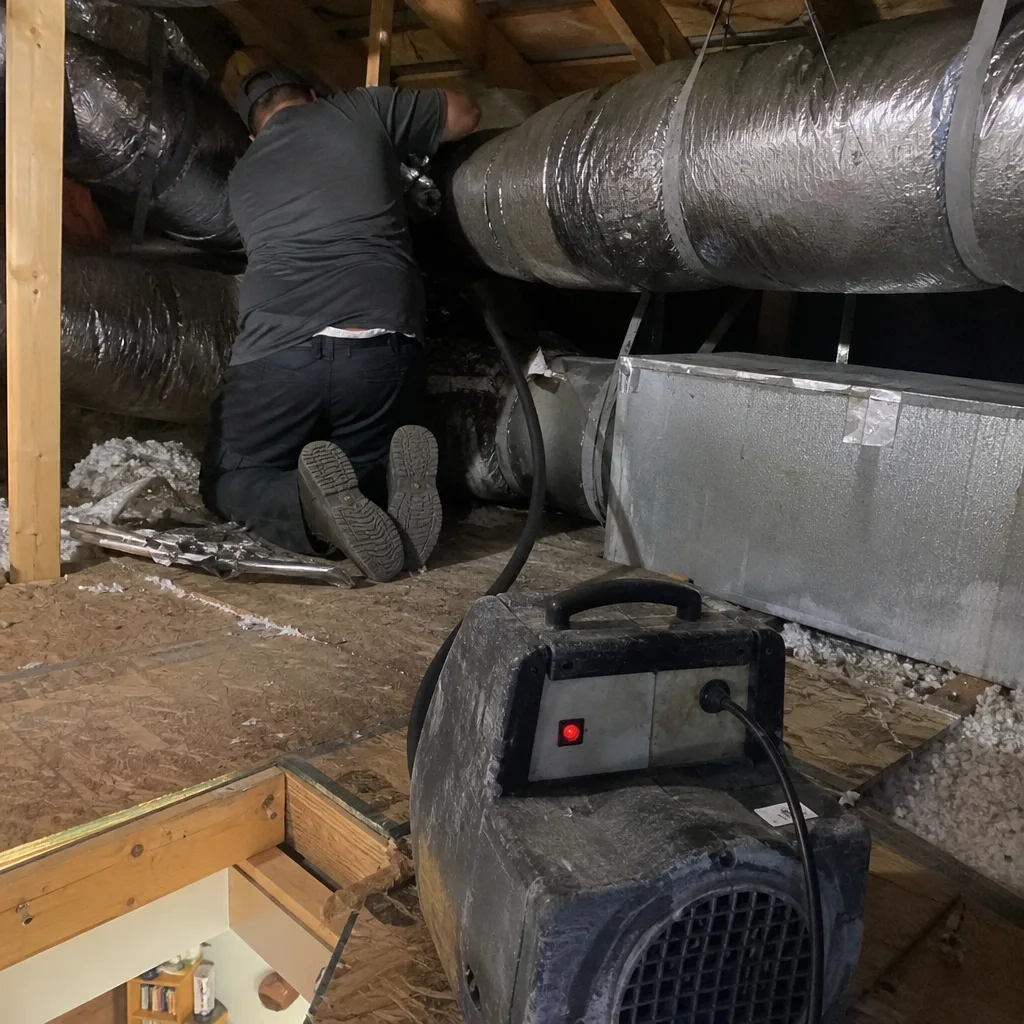 Before
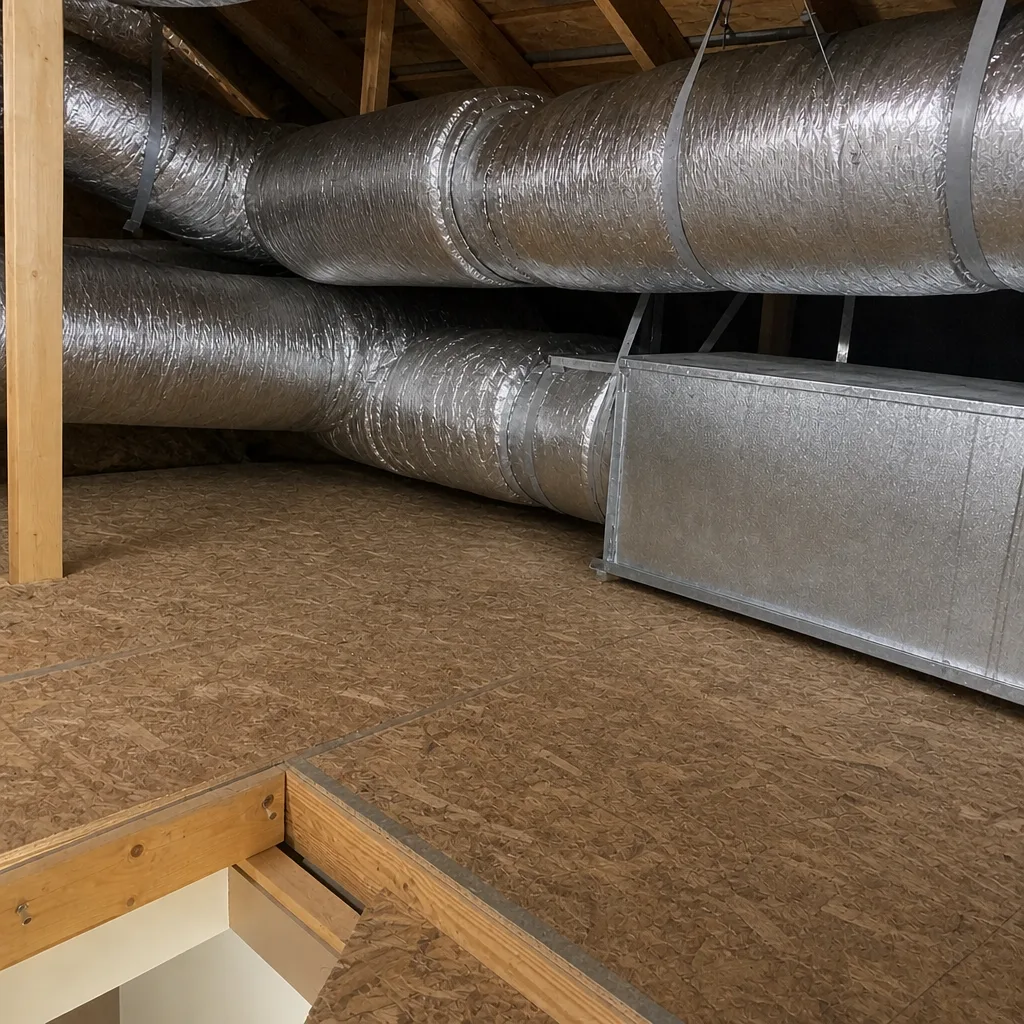 After
Frequently Asked Questions
DIY air duct cleaning is worthwhile only for the surface-level tasks: register cover cleaning, filter replacement, condensate drain checks, and exterior cap inspection. For the interior of the duct system, the equipment gap is too large. A consumer wet/dry vac moves roughly 55 to 80 CFM; professional truck-mount systems run in the thousands. That difference is what determines whether contaminants are removed or redistributed. For interior cleaning, call (844) 980-4682.
You likely need professional air duct cleaning if you’ve recently moved into an older Deltona home with no service history, if you see dust settling on register faces shortly after wiping them, if flex duct connections appear loose or damaged, or if allergy symptoms flare during the cooling season. The honest answer for many homes is that a professional inspection is the right first step, not a cleaning. A free estimate will tell you which one you actually need. Call (844) 980-4682.
Yes, in two ways. First, a shop vac lacks the exhaust filtration to contain what it agitates, so it can push contamination into your living space. Second, the brush attachments that come with consumer kits are not designed for the fragile foil liner inside pre-2005 flex duct common in Deltona. The liner can tear or delaminate, and once it’s damaged the duct must be replaced. That’s a repair job, not a cleaning.
Professional air duct cleaning in Deltona is priced per job based on the system size, the number of runs, and the condition of the ducts, so there is no single number that fits every home. The estimate is free, and the written estimate sets the final price. We do not quote per-vent prices, because per-vent pricing does not reflect the actual work required to clean a whole system. Call (844) 980-4682 for a free estimate.
There’s no universal calendar answer. Factors that matter include whether you have pets, whether anyone in the home has allergies, whether the home has had recent renovation work, and the condition of the duct system itself. In Deltona, the long cooling season means the system runs more of the year than in northern climates, which affects accumulation rate. A better approach than a fixed schedule is periodic inspection, with cleaning triggered by what’s actually found. Call (844) 980-4682 to ask about your specific situation.
A low quote usually reflects a different scope of work or a different grade of equipment, and both matter. Ask what the price includes: is the whole system being cleaned, is the equipment capable of holding negative pressure across every run, is there filtration on the exhaust, and is there an inspection to check flex duct condition before cleaning begins? A quote without those details is not a cheaper version of the same job. It’s a different job. Call (844) 980-4682 and we’ll walk you through what a professional-grade cleaning actually involves.
The Bottom Line
The DIY vs professional decision comes down to whether the equipment can achieve source removal. In Deltona’s flex duct systems, particularly in older homes, the equipment gap between a consumer vacuum and a professional-grade system is the difference between cleaning the system and damaging it. Do your part: registers, filters, condensate lines, exterior caps. Leave the duct interior to equipment that can actually pull debris out with proper containment. If something goes wrong with a DIY attempt, the follow-up is typically a repair or remediation that costs more than the original cleaning would have. Our technicians have up to 8 years of experience and can tell you honestly what your system needs. Call (844) 980-4682 for a free estimate. We answer 24/7. Fast dispatch from 7am to 7pm, Sunday through Friday.
Written by the team at Deltona Duct Cleaning.